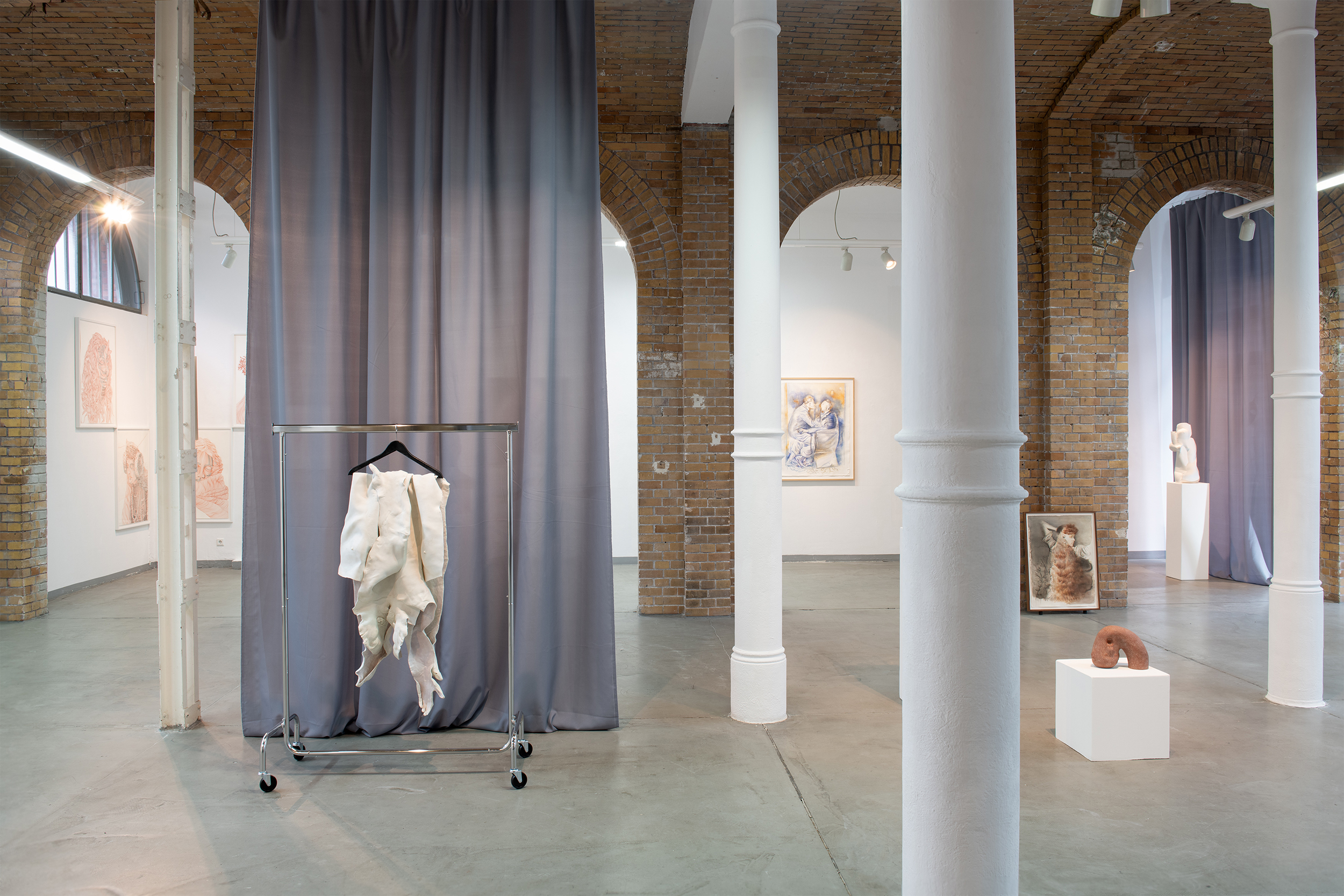
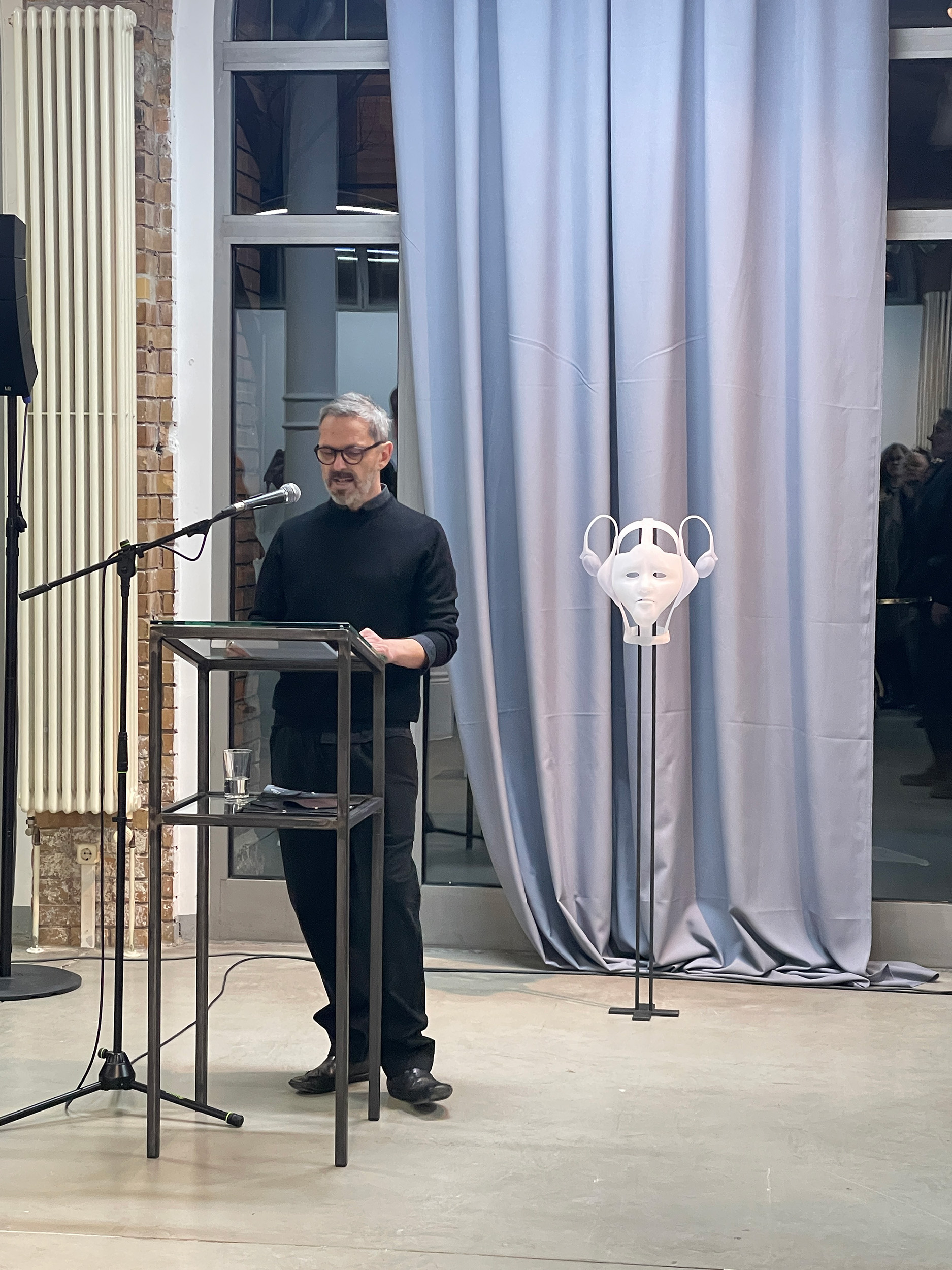
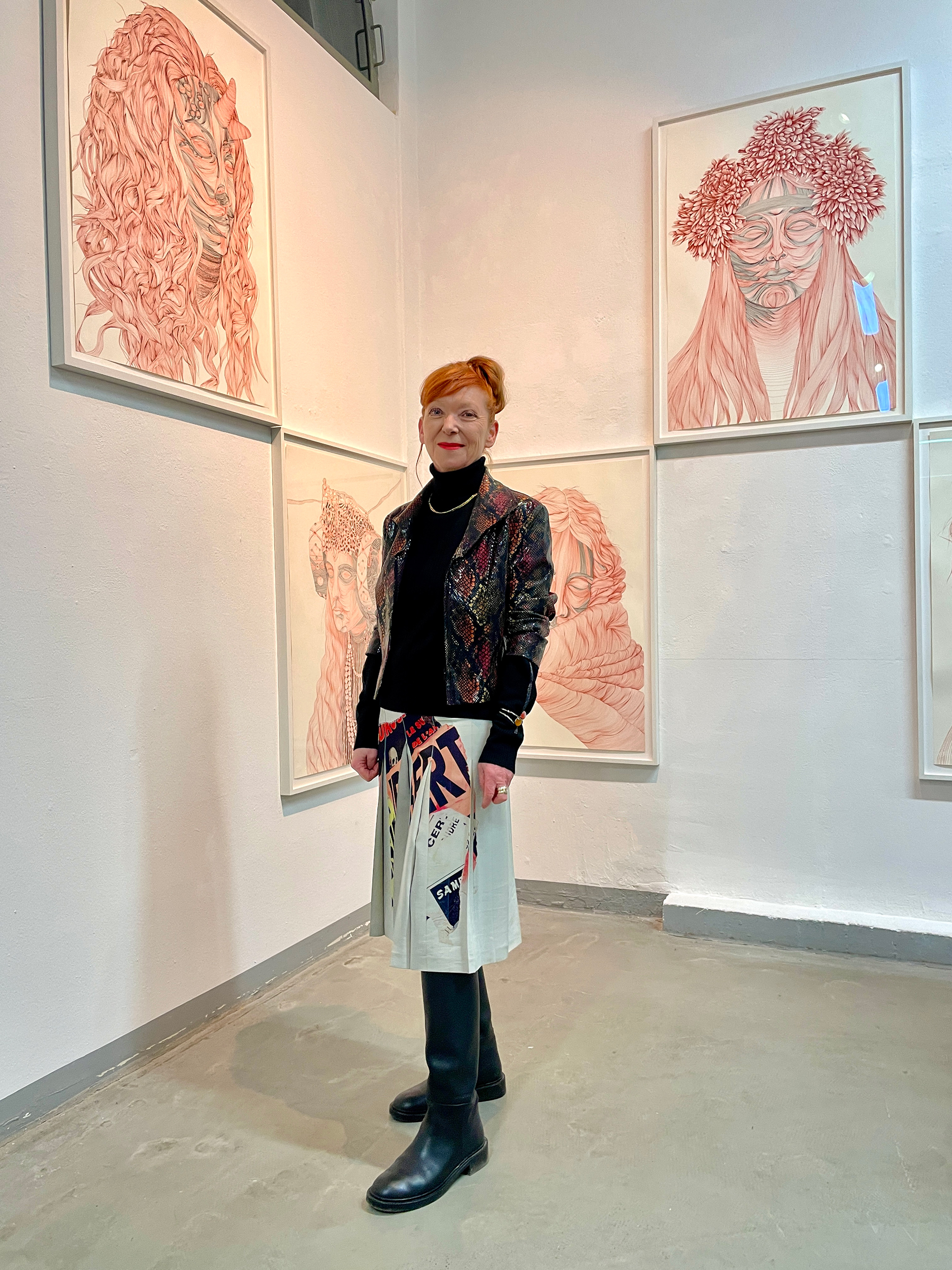
MIND SHAPES - von Köpfen die dazwischen sind, 2026
curated by Harald F. Theiss
Alte Feuerwache / Berlin
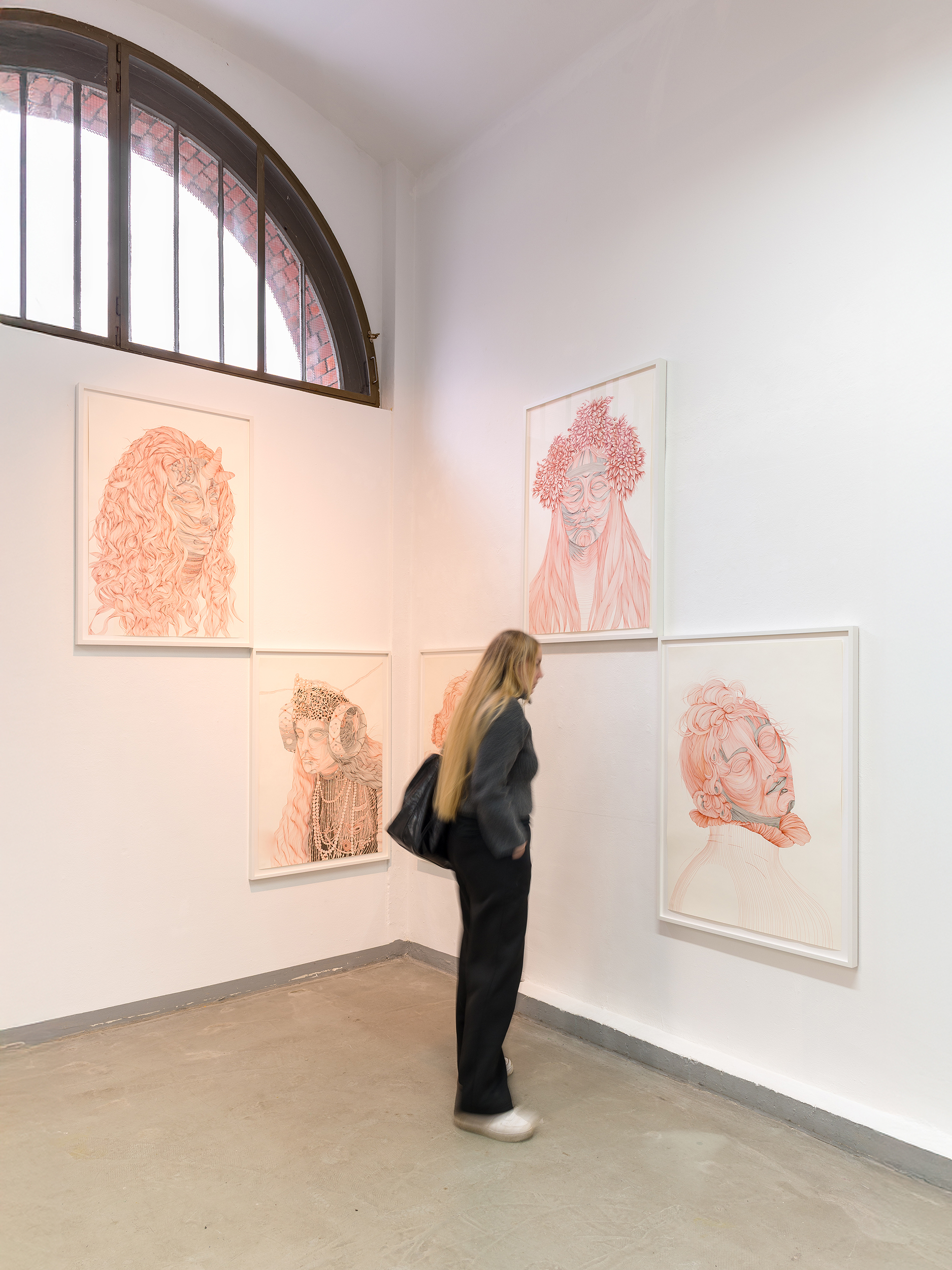
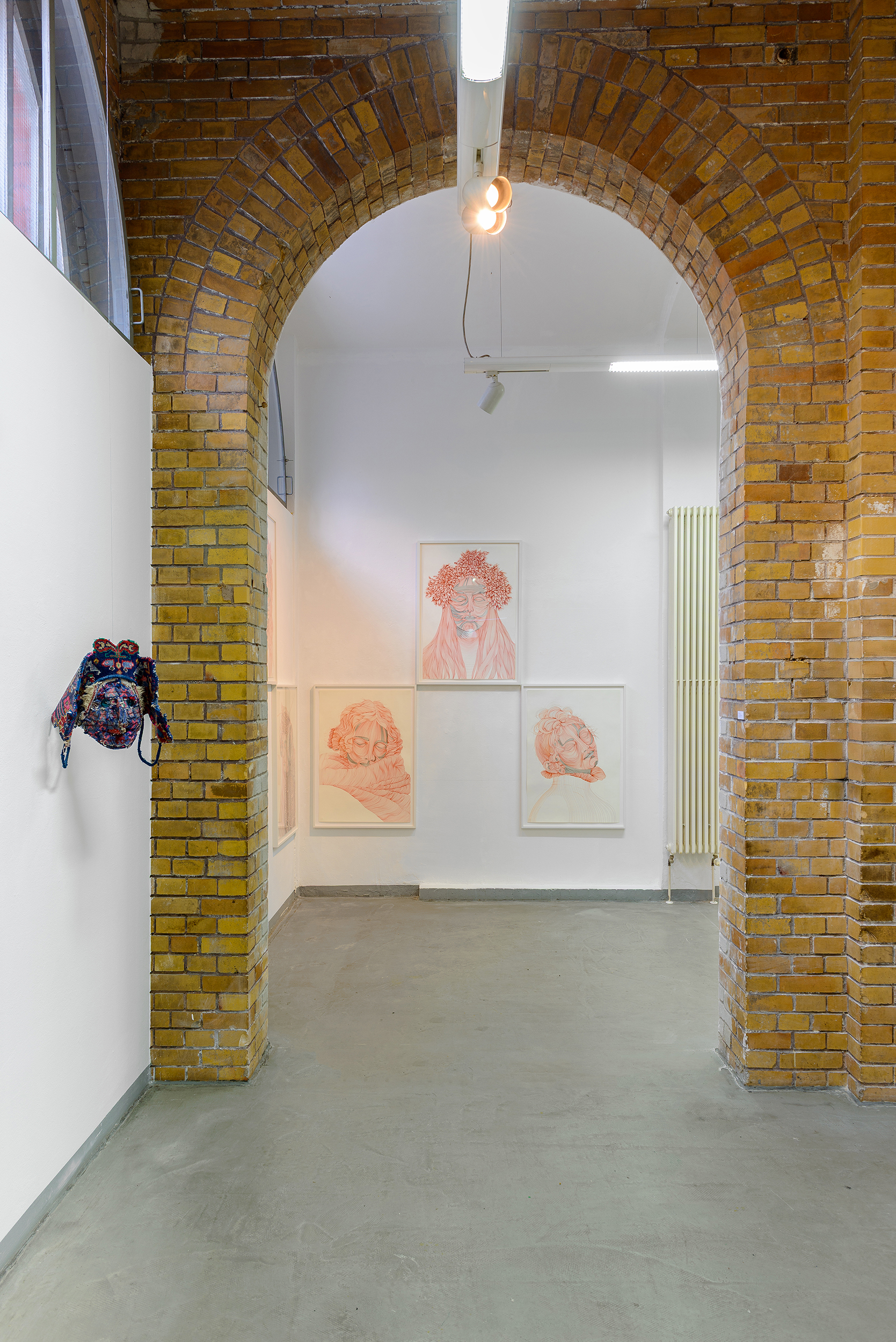
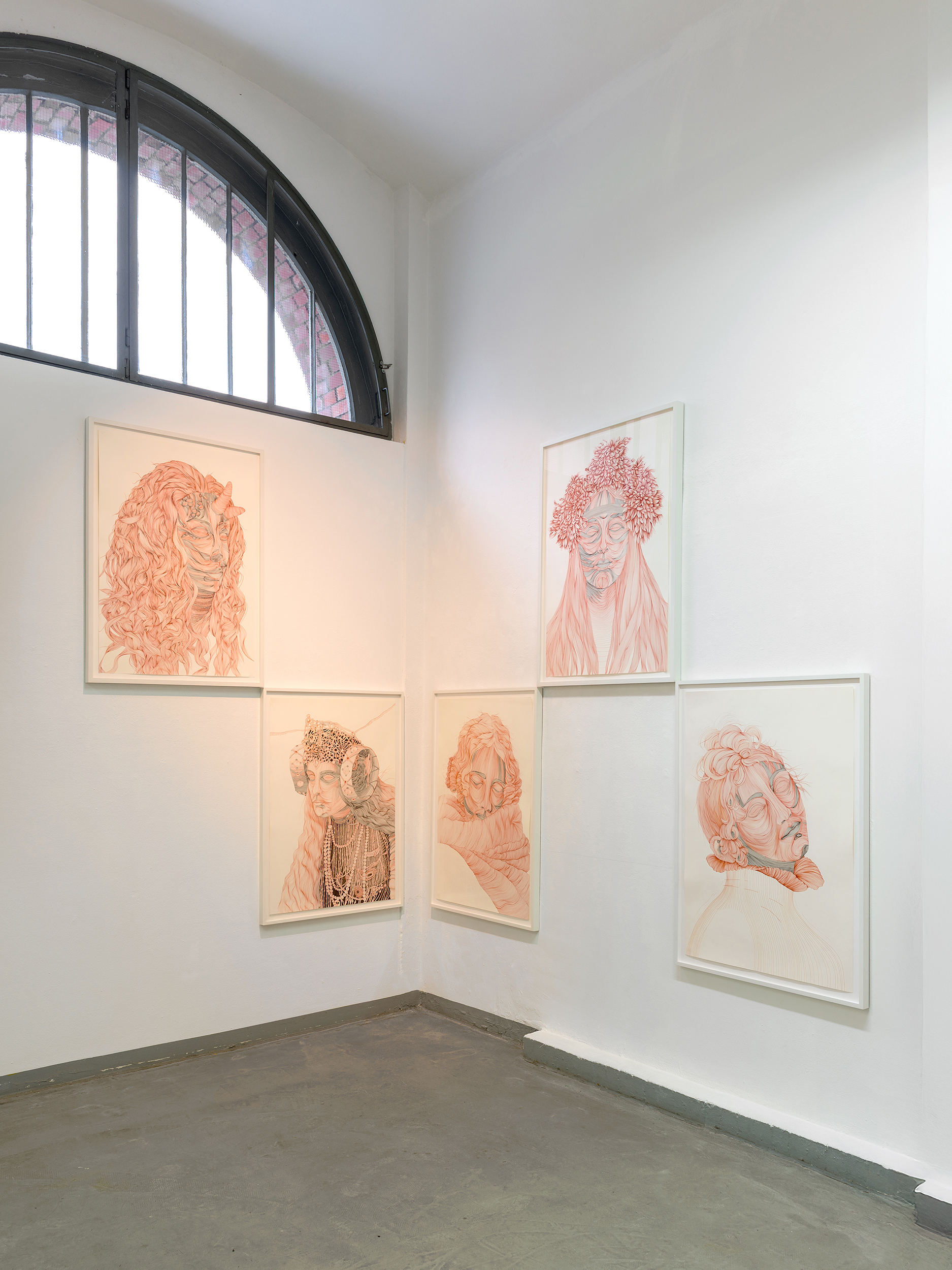
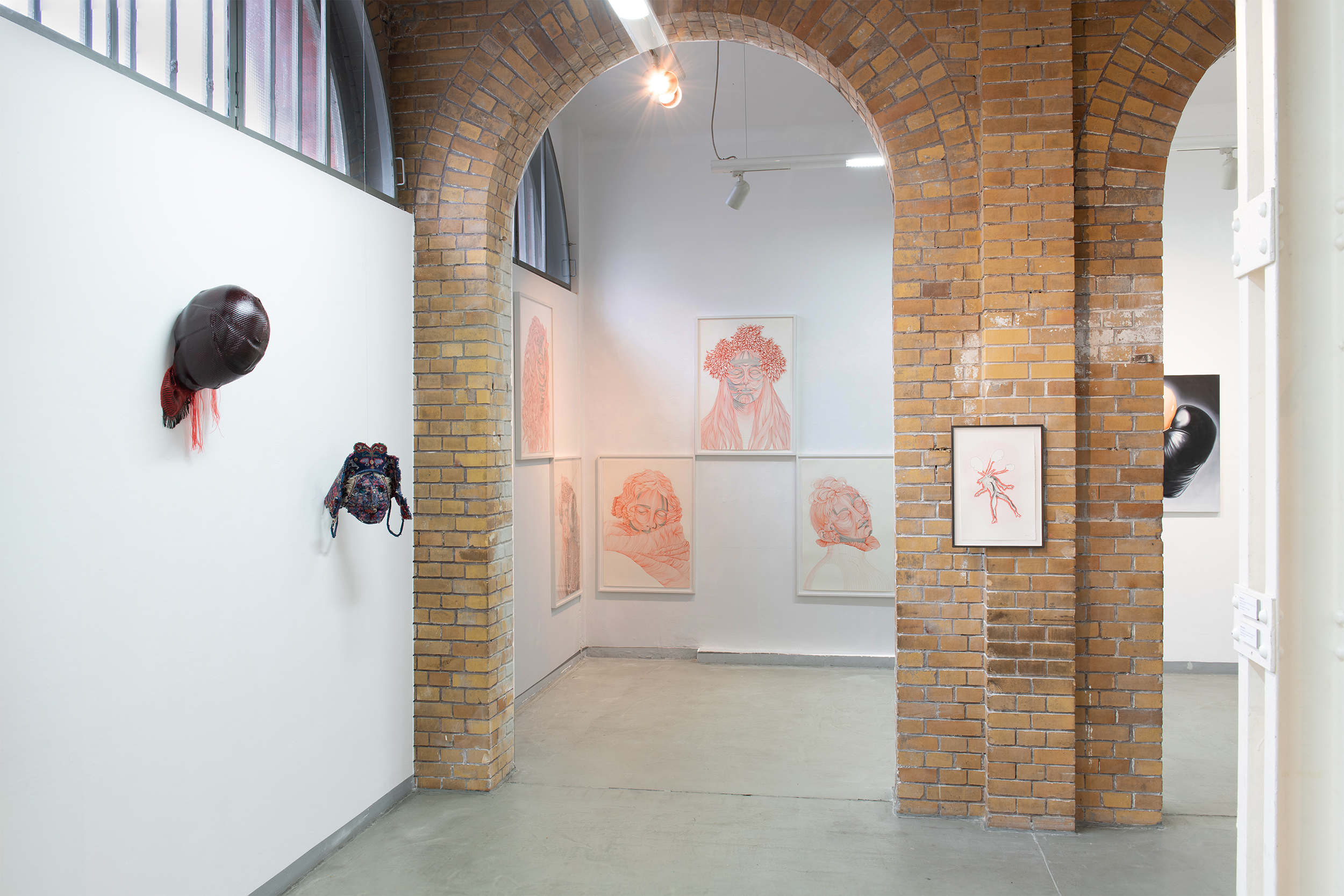
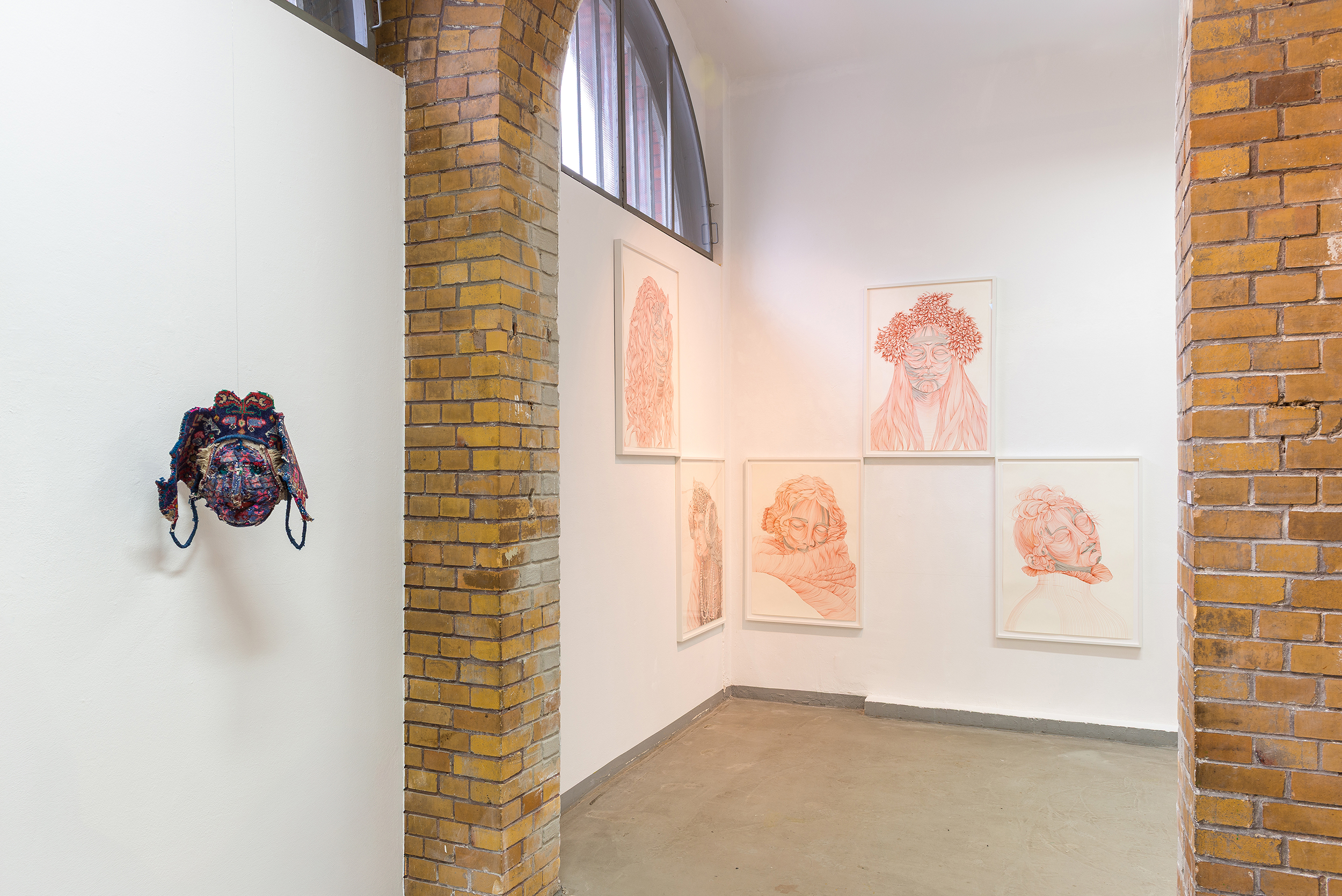
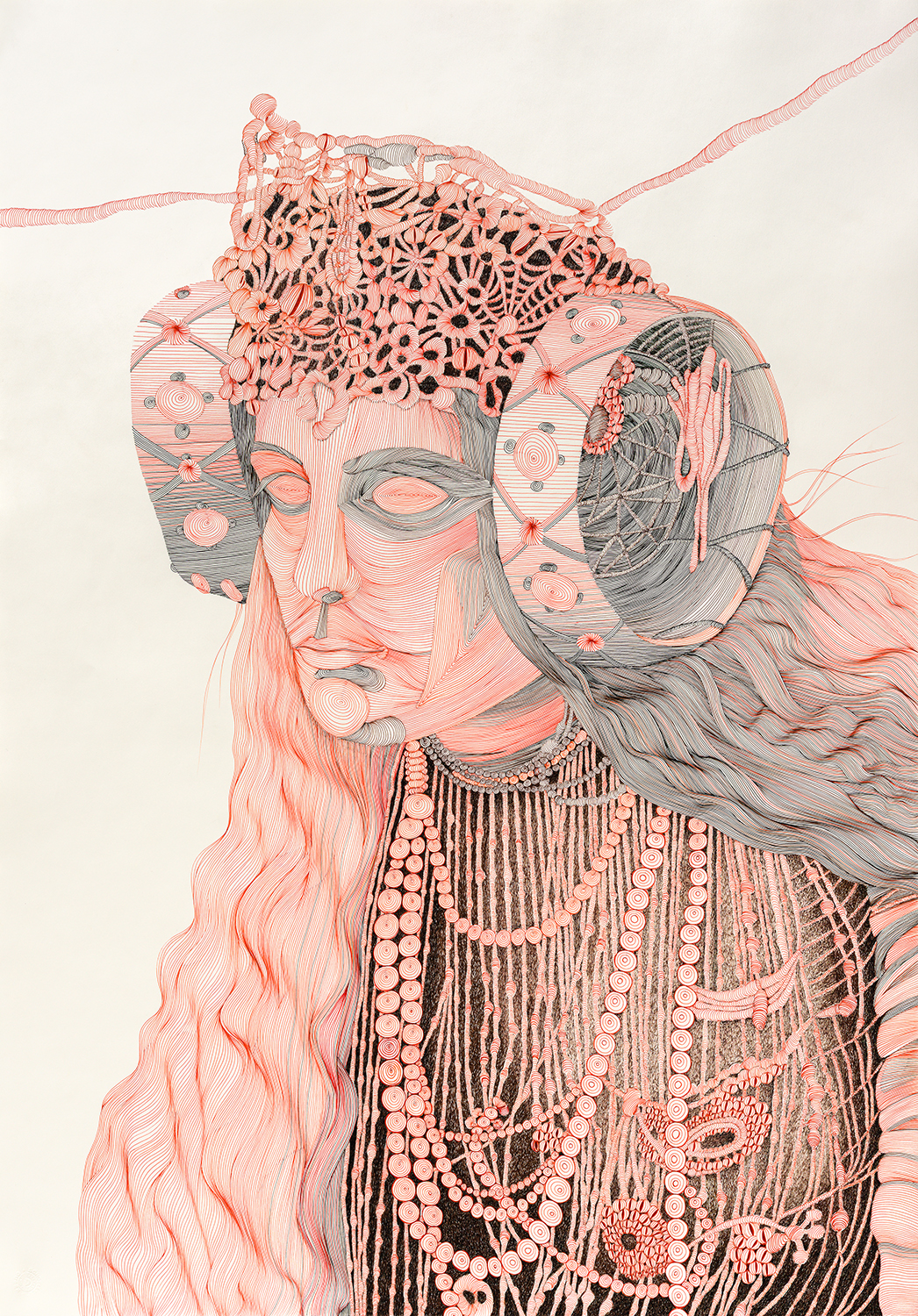
Drawings from the series Vorbilder weiblicher Transgression
Elsa, Bettina I, Bettina II, Carolee, Evelyn
ink on paper, each 100 x 70 cm
The head is a universal theme anchored in everyday culture through idioms etched in our collective memory. At a time when many things seem to have fallen into disarray, the project encourages us to consider an alternative order and images of society that do not yet exist, while also calling existing ones into question. The expression 'the world is upside down' describes a situation in which things are not as they should be. Conversely, 'a headless time' is not a common expression; it is a metaphorical description of a chaotic, unstructured or disorientated period characterised by a lack of planning, coherence or control. This expression can also refer to a reorganisation that follows when things are rushed. It is similar to a person acting 'headless‘.
It is time to clear our heads and get busy in a 'twisted' present beyond our thoughts. ‘For it is not enough to have a good head; the main thing is to use it correctly’. (René Descartes)
Die Redewendung „Die Welt steht Kopf“ beschreibt eine Situation, in der die Dinge nicht so sind, wie sie sein sollten. Eine „kopflos gewordene Zeit“ hingegen ist keine feste Redewendung, sondern eine metaphorische Beschreibung für eine chaotische, unstrukturierte oder orientierungslose Zeit, in der es an Plan, Zusammenhang oder Kontrolle mangelt. Der Ausdruck kann zugleich eine Neuordnung andeuten, die entsteht, wenn sich Ereignisse überschlagen, ähnlich wie bei einer Person, die „kopflos“ handelt.
Es ist Zeit, den Kopf freier zu bekommen und sich in einer „verdrehten“ Gegenwart über den Kopf hinaus zu beschäftigen: „Denn es ist nicht genug, einen guten Kopf zu haben; die Hauptsache ist, ihn richtig anzuwenden.“ (René Descartes)
Photography: Michael Schultze, Luca Caciagli